
Let me ask you this – do you know anyone who just opts out of using the bathroom… for no reason?
Exactly. That would be absurd.
Well, your cat feels the same way.
Cats are clean, instinctual animals. They want to use their litter box – all the time.
It’s not optional. It’s not negotiable. And it’s certainly not something they just “forget” to do.
So when your cat starts peeing or pooping outside the litter box, it’s never random. It’s never petty. And it’s never just a phase.
It’s a major red flag that your cat is struggling with something.
And chances are, they’ve been silently struggling for a long time – until they finally hit their breaking point and simply can’t take it anymore.
And no – this isn’t about protecting your couch, mattress, or carpets.
It is about protecting your cat. When your cat is okay, your home will be too.
Don’t Wait. Here’s Why
As a holistic cat behavior trainer, I can tell you with confidence – litter box problems are one of the most common issues I get called in for.
But here’s what breaks my heart: most cat parents wait months, sometimes even years, before taking action.
Because they think “My cat looks okay”, so they must be!!
Covering furniture with plastic, locking your cat out of rooms, ripping up the carpet – these are just band-aids to temporary fix YOUR problems. They do nothing to address your cat’s struggles that are causing them to pee or poop outside the litter box in the first place.
And every single day you delay is another day your cat lives in distress.
The issue gets worse. The behavior becomes deeply ingrained – now it’s also a habit. Your cat grows more miserable. The stress deepens. The emotional damage multiplies.
DO NOT WAIT. The sooner you act, the sooner your cat can feel better again.
Why Cats Pee Outside the Litter Box – The Most Common Root Causes
When your cat stops using their litterbox – even once – they’re sending you a message loud and clear:
“I’m in pain. I’m anxious. I’m overwhelmed. I’m struggling. I need your help.”
And here’s the truth: it’s rarely just one thing.
Litter box problems are often the result of multiple layers of stress or struggle – physical, emotional, environmental.
That’s why we need to look at the whole picture and address every root cause, one by one.
Here are the most common root causes that I see quite often:
Physical Pain or Medical Illness
Your cat might be suffering from:
- Urinary tract infections
- Bladder crystals or stones
- Painful inflammation or blockages
…just to name a few.
When your cat pees outside the litter box, it’s their only way to tell you,
“Something hurts. I need help.”
That’s why it’s absolutely critical to rule out medical issues first.
Only then can we confidently move forward knowing it’s a behavioral or emotional issue – and address it properly from the root.
Territorial Stress
Cats are very territorial beings, exactly like us. If they don’t feel safe, grounded, and fully “at home” in your space, they can become stressed, fearful, and even anxiously attached to you.
Territorial stress can show up when:
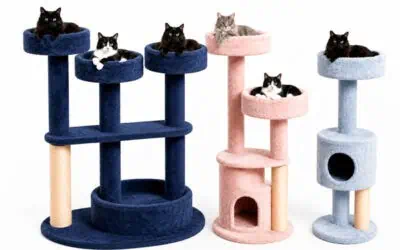
- There aren’t enough proper cat-only furnishings or vertical spaces to climb, use, and own (This alone causes chronic territorial stress)
- They are locked in certain rooms or areas
- They can roam freely but they’re denied access to certain rooms
- They’re blocked from being near their people
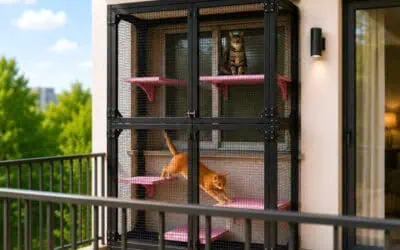
- Their indoor environment is depressing. No daylight, no proper access to windows, fresh air or views.
Your home must feel like their home too. Not just a place they live in, but a space they own.
Litter box Setup Issues
Many litter box problems are directly caused by the wrong litter box set up.
Your cat might be trying to use it – but it’s extremely challenging and stressful for them to do so
Here are the most common litter box setup problems that I see quite often:
- The litter box is too small – Your cat can’t move freely inside it.
- The Litter box is covered. Dark, and claustrophobic. Your cat can’t see, and may feel trapped or unsafe.
- The Litter box has a door, which is frustrating and annoying for your cat.
- The litter box is hidden away, and hard to access.
- The litter box is placed in an isolated location, basements, garages, or utility rooms far from your cat’s actual living space.
- Not enough litter boxes – Especially in large homes or multi-story houses.
- There aren’t enough litter boxes for multiple cats – Even in small apartments.
- The litter box is dirty. Your cat deserves a clean place to go, just like you.
- The litter is overly scented, which can irritate your cat’s sensitive nose and cause them to avoid the box altogether.
Bottom line: Design the litter box experience from your cat’s perspective – not your own convenience.
Trauma & Major Life Stress
These life events can deeply shake your cat’s emotional foundation:
- Moving to a new home
- Vet visits
- Grieving a beloved human or pet
- A new partner, roommate, baby, or pet (especially without proper introductions)
These traumas often linger under the surface and erupt in behaviors like inappropriate elimination.
Emotional Struggles with Other People
Cats are very sensitive to the emotional climate of your home.
If there are explosive arguments, a narcissistic or aggressive partner, or someone mistreating or even ignoring your cat, and you allow it – your cat may feel unsafe, unseen, and emotionally trapped.
Tension with Other Pets
If there’s another cat, dog, or animal in the house – and especially if there’s conflict, bullying, or chasing, it creates chronic stress.
Submissive or anxious cats may avoid common areas (like the litter box) to avoid confrontation.
Final Thoughts
Your cat litter box problem is a Scream for Help
If you’ve made it this far, I hope you’re starting to understand that your cat’s litter box problems:
- Are not “bad behavior.”, or even intentional.
- They’re not malicious. And they are NEVER random.
- They are your cat’s breaking point. And cry for help.
LISTEN to your cat. Respond with compassion. Seek real solutions, not quick fixes. And take actions for your cat, not your furniture. The sooner you solve your cat’s problems … the sooner both of you will be happy again.
If this made you realize your cat isn’t being difficult, they’re asking for help…
Litter box issues are one of the clearest distress signals a cat can give. In my 1:1 online cat behavior breakthrough session, we don’t manage symptoms. We uncover the behavioral root causes driving the litter box avoidance, whether it’s emotional stress, environmental tension, or relationship dynamics, and sort them out for good.
I’m a holistic cat trainer based in Vancouver, supporting conscious, loving cat parents locally and online across Canada and the US through my signature holistic cat training programs and cat introduction programs.
Regulation Starts in The Bowl

Get your FREE cat food ingredient decoder to learn how to read labels like a pro, and know which brands to buy and avoid.
Related Posts:
- The Ultimate Cat-Approved Litter box Setup: Prevent Common Litter box Problems Before They Start
- The Absolute Best Cat-Approved Litter boxes
- Litter box Rage Is Real: 8 Fatal Cat Litter box Mistakes That push Your Cats To The Edge
- Why Your Senior Cat Is Peeing Outside the Litter Box (And What to Do About It)
- Why Self-Cleaning Litter Boxes Are A Nightmare For Cats
- The Best Natural Cat Litter: Health, Safety, and Real Standards