Many litter box problems (though not all) come down to one thing: the litter box setup.
From the wrong size box to poor placement or a stressful location – your cat might be silently struggling. And when the setup doesn’t feel safe or comfortable, they may opt out of using it altogether.
In this FAQ-style guide, I’ll answer the most common questions cat parents have about litter boxes, so you can create stress-free setup your cat actually wants to use. No fluff. No gimmicks. Just simple, proven solutions that work for real cats in real homes.
Which litter box should I buy?
Go big, go open, and keep it simple.
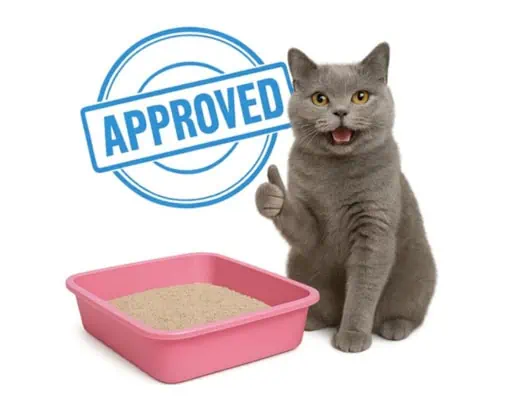
✔️ Top choice: Open, jumbo or XL litter boxes
Bare minimum is 20” long (For small cats)
Ideal size: 24” – 28″ long (For medium to large cats)
If you have a large size cat, go even bigger. The bigger, the better.
You can find plenty of large open litter boxes online – including on Amazon.
If litter scatter is a major concern to you, then opt for an open box with high sides.
Most cats are totally fine with them. Just be cautious if your cat is a senior or has mobility issues.
What about enclosed litter boxes?
I highly discourage using enclosed or covered litter boxes. So only get one if you absolutely must. And even then:
- Make sure it’s at least 20” x 20”
- It should have a wide side opening, a tall ceiling, and no door flap
- Skip anything too dark, tight, or awkwardly shaped
Enclosed litter boxes currently available on the market are often too small, too stuffy, and too stressful. That’s why I don’t recommend them
Remember: To your cat, the litter box isn’t just a toilet – it’s their entire bathroom.
So the size, shape, and accessibility matter. A lot.
Where should I place the litter box?
In a visible, open corner of your main living area – not hidden away.
Ideally, place it near a wall with at least two open sides so your cat can enter and exit freely without feeling trapped.
Stick to the rooms where you and your cat actually spend time:
Living room, bedroom, office, or dining room.
Bathrooms can work for some cats, but not all.
Avoid basements, garages, laundry rooms, or utility closets. Those are unfamiliar, isolated, and often filled with scary noises or stranger smells.
🚫 Also a hard NO: Inside cabinets, furniture, or closets
Your cat deserves a proper bathroom – not a dark, cramped storage unit.
How many litter boxes do I need for my space?
Even if you have just one cat, the size and layout of your home determines how many litter boxes you need.
Here’s the rule of thumb:
Rule #1: One litter box per bathroom
The number of bathrooms usually reflects the size of your home.
For example, if you have 3 bathrooms (including ensuites), you need 3 litter boxes.
Rule #2: One litter box per floor
If you have 3 floors, then you should have a litter box on each floor.
Don’t expect your cat to hike up and down the stairs just to pee – it’s annoying and unfair to them.
✅ Use the larger number between Rule #1 and Rule #2.
So if you have 3 bathrooms and 2 floors, stick with 3 litter boxes.
How many litter boxes do I need for all my cats?
First, figure out how many litter boxes your space requires for just one cat (see the previous section). That’s your bare minimum – regardless of how many cats you have.
Then apply the golden rule for multi-cat households:
One litter box per cat + one extra
For example:
If your space requires 2 litter boxes, but you have 3 cats, then you’ll need 4 litter boxes total.
✅ The final number should meet both the size of your space and the number of cats you have.
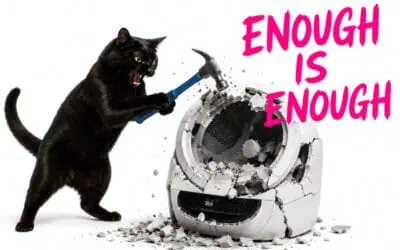
Can I use an automatic litter box?
Absolutely not.
They’re everything cats hate rolled into one:
- Too small
- Too dark
- Enclosed
- Elevated
- Weird circular shape
- And a self-cleaning mechanism that freaks out a lot of cats
It may seem convenient for you – but it’s a nightmare for your cat.
Can I use a litter box with manual cleaning built-in?
Nope. Still a bad idea.
These litter boxes are usually enclosed, and the built-in cleaning system takes up a big chunk of the usable space – leaving your cat with barely enough room to move, dig, or turn around.
If it compromises comfort or space, it’s not worth it.
How often should I scoop the litter boxes?
Scooping the litter twice per day is ideal.
Scooping the litter once a day is the bare minimum.
Cats are extremely clean animals. A dirty litter box is not just unpleasant – it’s a deal breaker for many cats.
That said, you don’t need to obsess over it.
Twice a day is good enough. No need to overdo it, especially if you have enough of the right size litter boxes.
How often should I replace the litter?
If you’re using clumping litter, you don’t need to replace it. daily scooping is enough to keep it clean.
If you’re using non-clumping litter, it should be fully replaced about 1-2 times per week, assuming the following:
- You’re scooping poop daily
- You have the right number of litter boxes
- All the litter boxes are being used consistently
🚩 However, if you notice strong odors, soggy patches, or your cat avoiding the box – that’s your cue to replace it more often.
Which litter type should I use?
The best litter types are the healthiest, most natural ones. Here’s what matters most when choosing the litter type:
🧼 Unscented only
Cats have extremely sensitive noses, and most scented litters are overwhelming to them.
Ideally Go unscented. Lightly scented is okay. Heavily scented is a strong No
🌿 Natural litter (great for cats & the planet)
Here are some popular natural options:
- Wood pellets or wood shavings
- Recycled paper pellets
- Corn-based litter
- Wheat-based litter
- Grass seed litter
- Coconut husk
Most are low-dust and biodegradable – but they vary in texture and absorption, so test what your cat prefers.
❓Clumping or non-clumping litter?
That depends on your cat’s preference first, then yours.
- Clumping litter is easier to scoop. Most adult cats are usually fine with it
- Non-clumping litter is okay too – as long as it’s changed regularly and kept clean
Important:
Young kittens must use non-clumping litter only.
Clumping litter can be dangerous if ingested during early stages of exploring.
At the end of the day, your cat’s comfort wins. Find what your cat likes and stick with it. Most cats are open to a variety of litter types as long as it’s natural and unscented, but some may still have personal preferences.
Is it okay to use a plastic bag or liner inside the litter box?
Absolutely no plastic bags inside litterboxes
As your cat digs or covers, their claws can easily get caught in the plastic – which is painful, frustrating, and can even lead to litter box avoidance.
Your cat deserves comfort, not claw-snags.
Final Thoughts
I hope this inspired you to roll up your sleeves to buy the right litter box for your cat, and to upgrade your cat’s litter box setup – starting now.
Don’t wait until you have a litter box problem because your cat just got fed up with the current setup.
A proper litter box setup keeps your cat happy, stress-free, and using the litter box confidently for life.
Small changes = big relief (for both of you).
Make the litter box a place your cat enjoys using – not one they dread.
If this made you realize how much the litter box setup actually matters…
Litter box problems never start with the cat. They start with setup, placement, and choices that don’t match your cat’s needs. This is exactly the type of issues I address in my 1:1 online cat behavior breakthrough session, where we build a cat-approved litter box system from the ground up to prevent stress, avoidance, and accidents before they begin.
I’m a holistic cat trainer based in Vancouver, supporting conscious, loving cat parents locally and online across Canada and the US through my signature holistic cat training programs and cat introduction programs.
Regulation Starts in The Bowl

Get your FREE cat food ingredient decoder to learn how to read labels like a pro, and know which brands to buy and avoid.
Related Posts:
- The Absolute Best Cat-Approved Litter boxes
- Your Cat’s Litter box Problem Is a Desperate Cry for Help – Don’t Ignore It
- Litter box Rage Is Real: 8 Fatal Cat Litter box Mistakes That push Your Cats To The Edge
- Why Your Senior Cat Is Peeing Outside the Litter Box (And What to Do About It)
- The Best Natural Cat Litter: Health, Safety, and Real Standards