This post is not about cat abusers.
This is about the loving cat parents – yes, YOU – who swear they’d never hurt their cat, yet do things that absolutely wreck your cat’s nervous system, confidence, emotional safety, and sense of belonging… because you don’t realize that what you’re doing is actually abusive. Or worse, because you think “it’s not a big deal.”
Anything that stresses your cat out, violates their boundaries, or forces them into helplessness counts as abuse.
Not intentional abuse. Not malicious abuse. But still abuse nonetheless.
And if this feels triggering already… good. That means your cat might finally get the advocate they desperately need.
Let’s talk about the common ways you might be abusing your cat without even knowing it – plus the deeper, more taboo ways no mainstream blog ever touches.
Spraying Your Cat With Water
(aka: “I don’t want to train, so I’ll terrorize instead”)
You know your cat hates water. You know the spray bottle freaks them out. And yet you grab your little “power washer” because your cat dared… to exist on the kitchen counter or the dinning table in their own home.
A water gun doesn’t “teach lessons.” It teaches fear. It teaches that you are unpredictable, and scary.
It damages trust faster than you can say “get down.”
Picking Them Up Without Consent
(Stop saying “my cat tolerates it.”)
Tolerating is not consenting.
A huge percentage of cats get stressed when:
- Their feet leave the ground
- They lose control of their body
- They’re held in ways they can’t escape
If your cat squirms, pushes away, or immediately jumps down the second you loosen your grip, that’s not “cute.”
That’s an obvious boundary violation.
Touching Your Cat Without Consent
(Cats have bodily autonomy. Deal with it.)
You already know you can’t walk up and touch strangers. You can’t randomly grope your partner or your kids.
We have social rules around consent because physical boundaries matter.
But when it comes to cats? Humans suddenly act like consent is optional or even given by default because the creature is small and can’t file a complaint.
Your cat’s body belongs to them. Not you. Not your nostalgia. Not your need for comfort. Not your anxiety.
So they have to give you their consent to touch their bodies. And you have to be mindful when enough is enough.
Controlling Their Bodies in Any Way
(If you have to restrain them, you didn’t train them.)
Let’s talk nail trimming. A very obvious example where parents feel entitled to control their cat’s body.
If your approach is:
wrap cat burrito, trap limbs, force stillness, clip while they panic
That’s abuse.
“I have no choice!” Actually, you do.
There’s such thing called “nail trimming training”, or don’t trim their nails at all. Those are your two options, so pick one.
Forcing Your Freaked-Out Cat Into a Carrier
(And pretending you “had to.”)
You grab the carrier from storage.
It smells like dust, fear, and last year’s vet visit.
You shove your terrified cat inside like stuffing a pillow into a case.
And then you say: “I had no other choice.” Yes, you did.
You always do have a choice.
You just chose not to do proper carrier training. Your lack of preparation is not your cat’s fault.
Ignoring or Resisting Their Meows
(Cats don’t talk for fun. They talk because they need to)
Your cat doesn’t meow because they’re “annoying.”
They meow because they:
- Need something
- Feel something
- Or are trying to communicate a problem
Dismissing a meow is like ignoring a crying baby because you “don’t feel like dealing with it.”
It’s rude. It’s neglectful. And it will only make things worse.
Using Your Cat as an Emotional Punching bag
(This one hurts – but it’s real.)
When humans are stressed, overwhelmed, lonely, or emotionally spiraling, they often do the following with their poor cats:
- Get impatient
- Get rough
- Stop paying attention
- Withdraw affection
- Ignore their cat’s needs
- Misinterpret normal cat behavior as “annoying”
- Snap over tiny inconveniences
- Or even project their own emotions and problems onto their cats ( A very common one)
Your mood becomes your cat’s weather system.
They must tiptoe around your emotional storms because they have no power, no escape, and no voice.
That’s abuse in slow motion.
Expecting Your Cat to Obey You
Cats are not obedience animals.
Cats are sovereign beings.
They don’t owe you obedience or anything really. And don’t even understand that weird noise you make “No”
Snapping when your cat does a totally natural cat behavior like: scratching, climbing, hunting, meowing, exploring,
Or zoomies
…is like reacting to a human for blinking. Your cat is not “misbehaving.” They’re being a cat.
If your expectations don’t fit the species, the problem is your expectations, not your cat.
Punishment Through Environmental Deprivation
(The silent abuse nobody notices.)
More than 90% of my clients are guilty of this. And they had no idea.
This is such a huge problem that no one is even noticing
Many cats live in:
- boring homes
- flat, dead space with no proper cat territories or vertical spaces for them to own
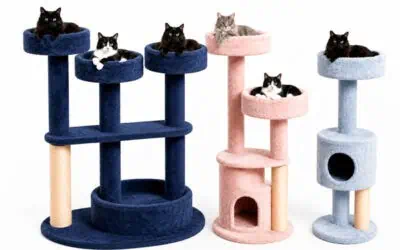
- maybe one sad tiny scratching post, or a wobbly cat tree with tiny seats that your cat can’t even use
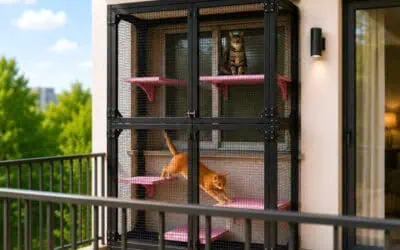
- No access to nature, proper window views or fresh air
- No guaranteed interactive play time
This is not “minimalism.” This is sensory starvation.
Imagine locking a human in a white box with no furniture, no windows, no TV, and no wifi. That’s the vibe.
And it leads to territorial stress. Because your cat can’t even get their basic environmental needs met.
Comparing Your Cat to Other People’s Cats
(And resenting them for being themselves.)
“My friend’s cat is calm, so why aren’t you?”
“My other cat never did this.”
“Why can’t you be more like a normal cat?”
You’d never say that to a child.
You’d never say that to a partner.
Comparison is emotional cruelty, even when the cat can’t understand the words. They feel the rejection in your tone, posture, and energy.
Every cat is unique. there’s absolutely nothing they can do about that. And it’s something to admire, not reject.
Because every cat you have is here to reach you something different.
Entitlement Disguised as Love
(The one nobody admits out loud.)
A shocking amount of cat parents operate from this mindset:
“You exist to soothe me.”
“You exist to cuddle when I want.”
“You exist to make me feel good.”
“You exist to be convenient.”
That’s not love. That’s narcissistic ownership. Love has zero entitlement in it. Ever.
The Impact of This Hidden Abuse on Your Cat
(The part that hits where it hurts)
Here’s what all these behaviors do inside your cat’s nervous system:
- They lose trust in you. Not because they’re dramatic. Because you became inconsistent, unpredictable, or even unsafe to be around.
- They lose their sense of safety and belongings, not only in their home, but in their own skin
- They lose confidence in themselves. If they’re constantly corrected, scolded, deprived, or dismissed, they shrink emotionally.
- Their world becomes a source of fear, lack and stress. A stressed cat is a shut-down one.
- Behavioral issues appear down the line. Not out of spite. But because their inner world is falling apart.
These, show up later as: Reactivity or even aggression, anxiety, hiding, over-grooming, litterbox avoidance, destructive behaviors, anxious attachment, or consistent meowing
So when those behaviors show up, don’t act shocked.
And don’t play the victim.
Your cat has reached their breaking point.
Final Thoughts
Most cat parents don’t mean to harm their cats in any way. But they do. Intention doesn’t erase impact.
Cats have boundaries, emotions, needs, wants. And a nervous system, exactly like us.
It’s time to treat your cat the way you treat the humans you care about with respect, sensitivity, patience, emotional awareness, and actual communication.
Your cat is a living, breathing, conscious being trusting you with their entire life.
Are you showing up as parent they deserve to have?
If this felt confronting, that’s not a bad thing…
Most harm isn’t intentional. It comes from misunderstanding, unconscious habits, and human-centered expectations. In my 1:1 online cat behavior breakthrough session, I help cat parents become aware of these patterns, understand how their actions land on their cat, and learn how to replace control and unrealistic expectations with consent, safety, and fulfillment.
I’m a holistic cat trainer based in Vancouver, supporting conscious, loving cat parents locally and online across Canada and the US through my signature holistic cat training programs and cat introduction programs.
Regulation Starts in The Bowl
Get your FREE cat food ingredient decoder to learn how to read labels like a pro, and know which brands to buy and avoid.