This post might stink a little, but it’s important.
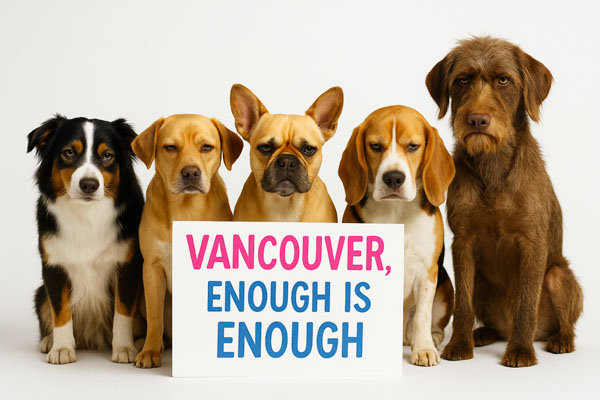
Someone needs to bring awareness to dog parents in Vancouver, given the current dynamic I witness almost every single day…
Vancouver is a gorgeous city.
Let’s get that out of the way first.
The mountains, the ocean, the forests, the stunning beaches, the warm weather (compared to the rest of Canada).
That’s why so many Canadians move here.
Even a simple walk on a residential street feels like a nature trail.
A Quick Note Before We Start
Now, before anyone gets offended on behalf of an entire city, let me add this:
For those of you who don’t know me, I’m a holistic dog trainer who actually lives in Vancouver. I moved here over 9 years ago from Montreal (which was a culture shock, to put it nicely) and I’ve been living here ever since.
And I work with reactive dogs in Vancouver.
I’ve also lived in multiple cities and countries in the past, so I know what “normal” social interaction looks like.
Trust me, Vancouver is nowhere near normal.
I see exactly how this culture affects our dogs, and I’ve figured out how to overcome it with my reactive dog clients despite all the odds.
This post is my humble attempt to encourage you to do the same once you see the big picture.
The Fact: Vancouver’s Unwritten Antisocial Rules
Vancouver is one of the most antisocial cities I’ve ever lived in.
It’s culturally closed-off, emotionally unavailable, and people are expected to stay in their tiny cycle of friends and family… which usually gets smaller over time, or disappears entirely.
Here are the Vancouver secret bylaws in a nutshell:
- Talking to strangers is illegal.
- Smiling is suspicious.
- Eye contact is rare.
- Greeting someone on the street, or even your own neighbor in the elevator, is enough to make them glitch like an unplugged robot.
Everyone walks around with the emotional availability of a checkout machine.
I call it “the city of robots.”
The Problem: The Struggles of Vancouver Dogs
So Vancouver is an antisocial city. Fine.
Humans can choose this antisocial lifestyle. But dogs can’t.
Dogs are wired for social connection, and Vancouver dogs are no different.
Dogs not only thrive on social interaction, it’s their main source of safety, confidence, and belonging.
Dogs need to greet others.
They need to watch others.
They need to interact with others.
They need to communicate with others.
They need to play with others.
They need to spend quality time with others. Period.
“Others” include both other people and dogs. Not one without the other.
A dog’s social life can’t be separated from their environment.
It’s an essential part of it.
Do you see the paradox?
A deeply social creature is expected to function in a chronically antisocial city.
So how do we work with this dilemma?
The Quick Fix: Vancouver’s Dog Control Culture
The way Vancouver dog parents cope with this paradox is by forcing their naturally social dogs to obey the antisocial rules of the city.
- They control and micromanage every move their dog makes outside.
- They force their dog to ignore everything they naturally thrive on.
- They drag their dog away from anything interesting.
- They walk them like they’re defusing a bomb.
Vancouver dogs are kept in a tight bubble of human anxiety, and walked like a military drill.
This is what I see every single day:
- The parent avoiding eye contact.
- The dog pulled away from a greeting.
- The tight short leash.
- The awkward energy.
- The “don’t talk to me”, “don’t look at me” vibe projected straight into the dog’s nervous system.
And Vancouver dog parents think they’re teaching “politeness.”
But what they’re actually teaching is:
You are unsafe to approach the world, so shut everything down. You are not allowed to be a dog.
Let me paint the everyday picture in more details.
Most Vancouver dogs are:
- not allowed to sniff anywhere
- not allowed to greet anyone
- not allowed to even look up at another dog or person
- not allowed to approach other people or dogs
- not allowed to watch or observe their environment
- forced to focus on only their parent the entire walk
- expected to act like silent robots
- living in total social isolation
Which is the exact opposite of how they’re wired.
The Reality: The Myth of the “Anti-Social Dog”
Let me say this loudly and clearly:
There is no such thing as an antisocial dog. There are only reactive ones.
You’re not teaching your dog politeness.
You’re creating a reactive dog who’s scared of the world because they never got the chance to explore it.
This is one of the rare times when your dog shouldn’t trust you or follow your lead, but they unfortunately do.
They believe you’re pulling them away from danger. Not from a ridiculous antisocial culture.
So you either have a social dog or you have:
- a reactive dog
- a fearful dog
- a stressed dog
- a confused dog
- or an anxious dog
You can’t and shouldn’t discourage your dog’s basic nature to be curious and social.
Silencing your dog doesn’t make them well behaved. It makes them unstable.
Do you see now how your quick fix to cope with an antisocial culture is causing only harm to your poor dog?
The Way Out: Break the Antisocial Rules
This is what I do with my dog clients, successfully, every day.
It takes courage at first, but it gets easier with practice.
I break the antisocial rules.
All of them.
I pretend I live in a different city.
And it works.
When I walk and train my dog clients, I don’t play the Vancouver game.
I play the opposite game:
- We make eye-contact, approach and greet other people.
- We greet other dogs who are open to greet us.
- We go to construction sites, and interact with the workers.
- We take our time sniffing everywhere including in other people’s front yards.
- We stop and watch squirrels in the middle of the sidewalk.
- We stare at people doing funny things.
- We explore the city and everything it has to offer.
- We even go inside places we are technically not supposed to go to.
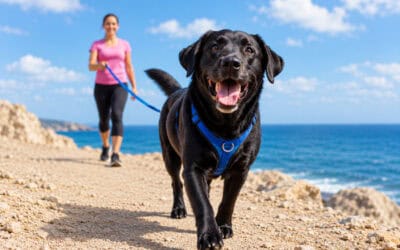
We actually live the life a dog is supposed to live.
And most importantly
I am unapologetic about it all.
Then I coach my dog parent clients to do the same.
They’re usually scared at first, but they soon realize it’s not as bad as they thought.
We’re not breaking any laws, just social norms.
And the payoff?
Their dog gets the most fulfilling walk of their life, build their confidence, feel empowered, important and in control, for a change.
The only rule I follow is what the dog can handle, based on where their nervous system is at.
It’s gradual exposure, guided by the dog – never by the city’s ridiculous culture.
Try it.
Let your dog take the lead, and just follow, as long as it’s safe to do so.
The worst thing that can happen? You get rejected by someone. Meaning a person ignores you, your dog and walks away.
Big deal? Not even a little. You will get used to it.
Your dog’s fulfillment, emotional balance, and enrichment are not optional.
Not even in a city like Vancouver.
And here’s the important part:
When dogs are allowed to be dogs, they become confident, stable, social, and grounded.
Not reactive, anxious, or overwhelmed.
Bonus: How to Support Vancouver Dogs If You Don’t Have a Dog Yourself
I’m hoping we eventually reach a city-wide awareness and collectively support all the dogs living here.
Even if you don’t have a dog yourself, there’s a lot you can do.
Here’s what I personally do when I’m not walk-training another dog, so you can do the same:
- I smile, make eye contact, and verbally greet every dog I walk by, and even compliment them. Our dogs desperately need warm and friendly interactions.
- If the parent responds positively and the dog shows interest, I greet them, and give them treats, if I have any.
- If the parent is in their antisocial bubble and pulls their dog away, that’s fine too. I still did my part. The dog knows it.
No one can control who you smile at or talk to. So you absolutely don’t need a dog parent’s permission to look at, smile at, or speak to their dog.
The only boundary you must respect is personal space. That means no touching a dog without the dog’s consent and the parent’s permission.
Bonus tip: carry healthy dog treats. This is a natural ice breaker with dogs. Many dogs will gravitate toward you when they smell the treats.
And the good news?
Many people actually like the attention, and will welcome it.
They’re just too shy to initiate social interaction.
Final Thoughts
Vancouver may be antisocial, but your Vancouver dog can’t be.
With the right support, you can nurture your dog’s true nature, so they don’t become another reactive statistic.
This city teaches avoidance. Your dog needs the opposite.
If you live in Vancouver, your job is to unapologetically prioritize your dog’s needs:
- Give them choice.
- Encourage curiosity.
- Create social experiences.
- Let their world be bigger than your social anxiety bubble.
Your dog doesn’t need you to be a perfect Vancouver citizen. They need you to be their advocate.
They need you to let them be social in a city that forgot how.
If this felt uncomfortably familiar as a Vancouver dog parent…
Just know that reactivity here isn’t random. It’s shaped by environment, culture, and unspoken rules that disconnect dogs from their true social nature.
Ready to Help Your Dog Thrive?
If your dog is struggling with reactivity, fear, or anxiety, or you’re ready to upgrade their lifestyle and connect with them like never before, check out my 1:1 In-Person Vancouver Dog Behavior Breakthrough Session. This comprehensive 3-hour assessment covers the foundations needed to help your dog move from survival and lack to safety and fulfillment.
I’m a holistic dog trainer in Vancouver, helping dogs thrive through my in-person holistic dog training programs and dog walk & train programs.
P.S. If you live outside my Vancouver service area (Downtown, Kitsilano, Yaletown, West-End, Mount Pleasant, and East Van), or can’t bring your dog here, then check out my 1:1 online dog behavior breakthrough session.
Regulation Starts in The Bowl

Get your FREE dog food ingredient decoder to learn how to read labels like a pro, and know which brands to buy and avoid.
Related Posts:
- Your Dog Isn’t Broken. Your Lens Is
- Why Your Dog Is Calm at Home but Reactive Outside
- Telling a Scared Dog ‘No’ Is Emotional Abuse, Not Training
- Your Dog Pulls on the Leash Because They are Deprived – The Unmet Needs Dilemma
- The 5 Pillars of Holistic Dog Training: The Framework Behind Lasting Results
- The Psychology of a Confident Dog: What Reactive Dogs Are Missing