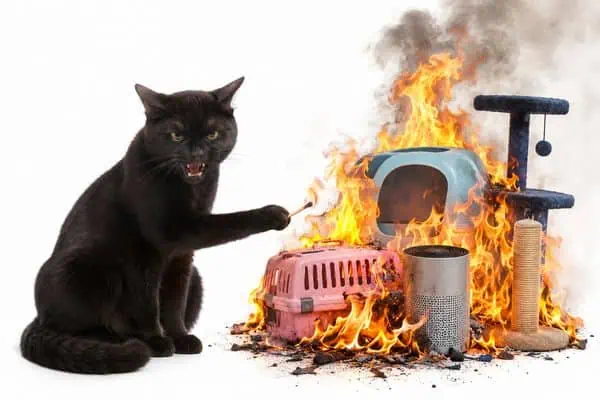
We’ve taken human convenience and quick-fix cat products to a whole new level, often without considering our cats’ health, comfort, well-being, or relationships.
The cat product market is packed with products designed to make our lives easier, sometimes at the expense of our cats.
Just because a cat product is popular, convenient, or marketed as “cat-friendly” doesn’t mean it’s actually good for your cat.
As a holistic cat trainer, I do my own research on popular cat products, and I also get constant feedback from my cat clients and their parents on products they’ve used.
This blog post is my honest professional opinion on particular cat product types that I never buy or recommend, why they don’t work, and what to buy instead.
❌ Self-Cleaning Litter Boxes
Automatic self-cleaning litter boxes are often small, enclosed, awkwardly shaped, and noisy.
Yet you pay a fortune for them to save yourself the few seconds it takes to scoop a litter box!!
And who pays the price for that convenience? Your cat.
The confined space, mechanical movements, and unpredictable noises make self-cleaning litter boxes stressful for many cats, even though some cats tolerate them for some time.
Over time, this constant daily stress can build up, leading to litter box avoidance and other stress-related problems.
I’ve written an entire blog post explaining why self-cleaning litter boxes are stressful for cats.
Your cat needs to enjoy using their litter box – all day, every day.
Think about it. Self-cleaning litter boxes are like human porta-potties.
Would you want to use a porta-potty for the rest of your life? No.
So why would you expect your cat to?
❌ Enclosed Litter Boxes
Even larger enclosed litter boxes can make it challenging for cats to move freely and perform their natural bathroom routine.
The litter box isn’t just the toilet. It’s the entire bathroom for your cat.
Not to mention how stuffy they can get inside, trapping the smell of urine, poop, and litter with limited airflow.
It’s like forcing yourself to use a dirty, smelly bathroom every single day.
Litter boxes need proper ventilation and airflow. That’s non-negotiable.
Enclosed litter boxes can become even more problematic in multi-cat households, especially when the cats don’t have a great relationship. A cat can block the entrance, ambush another cat coming out, or make them feel trapped with no alternative escape route.
What I recommend instead: Large, open litter boxes that allow cats to move comfortably, breathe properly, see their surroundings, and feel safe while doing their business.
Your cat should be able to use their litter box without feeling trapped, uncomfortable, or vulnerable.
❌ Heavily Scented Cat Litter
We keep forgetting that cats have a much more sensitive sense of smell than humans.
Now imagine having to deal with an overpowering artificial fragrance every single time you need to use the bathroom.
How do you think that would make you feel?
Strongly scented litter is overwhelming to cats’ sensitive noses, especially when they’re digging through it and breathing close to the litter surface.
To make matters worse, many cat parents use heavily scented litter inside enclosed litter boxes with poor ventilation.
Now your cat is trapped in a small space with concentrated artificial fragrances, urine, and poop odors.
What I recommend instead: Natural, unscented cat litter. Your cat doesn’t need perfume in their bathroom.
❌ Slow Feeders
If your cat is eating too fast, always looking for food, or even stealing food, that’s a strong sign that your cat is very hungry.
Those cats are often eating junk food, being fed only two meals a day, or simply not getting enough food or nutrients to meet their body’s needs.
Food competition in multi-cat households can also make cats feel pressured to eat quickly, especially when they’re worried another cat might steal their food.
A slow feeder doesn’t solve your cat’s hunger or competition problem. It only adds more stress on top of stress.
Food is a basic survival need, and if your cat is telling you loud and clear that they’re hungry, it’s because they’re hungry.
The solution is to listen to your cat’s feedback and address their hunger problem by providing more frequent, healthy, hydrating meals, with healthy snacks in between, so they’re never that hungry.
And if it’s just a food competition problem with other cats, meaning your cats will eat much slower when away from each other, then simply feed them in separate rooms away from one another.
❌ Bad Cat Trees
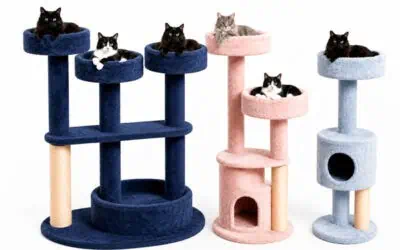
The cat product market is flooded with poorly designed cat trees that are uncomfortable, impractical, or downright unsafe.
I’m talking about:
- Short cat trees that don’t provide meaningful vertical space.
- Cat trees with tiny seats that barely accommodate an average size cat.
- Wobbly, unstable cat trees that are unsafe to use.
- Cat trees made with cheap, low-quality materials that need to be attached to a wall so they don’t tip over!
I’ve written an entire blog post about the worst cat trees to never buy and why.
Cat trees are non-negotiable for cats, so we need to invest in proper, high-quality cat trees.
Want to learn how to properly shop for cat trees? Check out my cat tree shopping guide.
❌ Small Cat Scratchers
I’m talking about short vertical scratching posts and tiny cardboard scratchers that barely give your cat enough room to stretch.
Cats don’t scratch just to maintain their claws.
Scratching is also a full-body stretching activity.
So why are we expecting cats to squeeze themselves into awkward positions just to use a scratcher?
Your cat should be able to stretch their body comfortably while scratching, not adjust their natural behavior to accommodate a poorly designed product.
What I recommend instead: Tall, sturdy vertical scratchers and large cardboard scratchers that allow your cat to stretch comfortably.
❌ Hard Cat Carriers
The majority of hard carriers commonly used for cats are too small for an average adult cat. They can’t move freely, lounge, or relax comfortably inside those carriers.
Hard cat carriers are useful for animal shelters since they can be stacked on top of each other.
However, if you have your own cat, I recommend getting a large, soft cat carrier so your cat can spread their scent on it, treat it as part of their own furniture, and comfortably lounge, move, and relax inside.
This makes cat carrier training a piece of cake.
❌ Feline Pheromone Diffusers
Unfortunately, these have become the go-to fix for many cat parents dealing with anxious cats or introducing two cats.
Pheromone diffusers release synthetic versions of feline chemical signals that are supposed to help cats feel calmer and safer.
But here’s what many cat parents don’t understand:
Each cat has their own distinctive scent.
Cats rely heavily on their own familiar scent to feel safe and at home. They also recognize other cats by their individual scents, even without seeing them.
So why rely on a generic synthetic scent instead of working with the cat’s own scent?
From my experience working with so many cats, I’ve never seen feline pheromone diffusers make a meaningful difference.
If your cat is anxious, we need to understand and resolve the root causes of your cat’s anxiety. If territorial stress is a factor, then spreading your cat’s own scent can help them feel safer in their environment.
And when introducing two cats, what matters is helping them gradually recognize each other’s unique scent and associate it with home and positive experiences. So proper scent swapping is a must, along with meeting each cat’s needs and addressing their individual problems.
Plug it in and forget it isn’t going to magically build a relationship between your cats.
❌ Cat “Purrito” Wraps
I’m not talking about restraining cats for medical emergencies, essential medical care, or rescue situations.
I’m talking about using forced restraint as a replacement for proper cat training.
A common example is wrapping your cat tightly in a towel to trim their nails, groom them, or force them through routine procedures.
Have you ever stopped to think about how that makes your cat feel?
Imagine being trapped, unable to move or escape, while someone forces you through something you’re terrified of.
For many cats, that’s an extremely traumatic experience that can have lasting effects on their nervous system and emotional wellbeing. It can leave them feeling helpless, powerless, and unsafe.
Repeated experiences like this can reinforce fear, create lasting negative associations, and make future handling even more stressful.
If you want to trim your cat’s nails, teach them to feel safe and comfortable with the process through gradual, cooperative nail-trimming training, or don’t trim their nails at all.
Restraint isn’t a substitute for cat training. Your cat deserves to feel safe, respected, and in control of their own body.
❌ Air Purifiers: Not All Are Safe for Cats
Whether it’s a regular air purifier or one marketed specifically for pets, what matters is the technology inside it.
Here’s what I avoid and why:
Ozone Generators and Ionizers
Ozone is a toxic gas that irritates the cat’s respiratory system, causes airway inflammation, and can damage lung tissue. It’s especially concerning for cats with asthma or other respiratory problems.
Some ionizers also release ozone, so I prefer avoiding them altogether.
Ozone can also react with household chemicals, creating additional harmful indoor pollutants, including formaldehyde.
UV-C Air Purifiers
Some UV-C air purifiers produce ozone as a byproduct. Not all do, but I wouldn’t recommend one without verifying that it’s ozone-free.
Noisy Air Purifiers
Cats have extremely sensitive hearing. Constant humming, buzzing, or high-pitched noises can be disturbing and stressful to many cats, especially for noise-sensitive cats.
What I recommend instead:
Ideally, open the windows with screens and allow fresh air to circulate properly. That’s the most natural, safe option for both you and your cat.
Fresh air and proper access to nature are essential for your cat’s emotional wellbeing.
But if you really need an air purifier, look for a quiet, mechanical HEPA air purifier without ionizers or ozone-generating technology.
You don’t need fancy technology to clean the air, especially when it could compromise your cat’s wellbeing.
❌ Enzyme Cleaners for Cat Urine
Enzyme cleaners are commonly recommended for removing cat urine odors.
While the enzymes themselves are generally safe, it’s the additional ingredients in some commercial cleaners that concern me.
Here’s why I avoid certain enzyme cleaners:
Essential oils and artificial fragrances:
Some cleaners contain fragrances or essential oils, such as citrus, eucalyptus, or pine, that can be toxic to cats. Cats have a limited ability to metabolize certain compounds in essential oils, putting them at greater risk of poisoning and even liver damage.
Chemical residues:
Cats groom themselves constantly. If they walk on a freshly treated surface and lick their paws, they can ingest cleaning chemicals that may cause drooling, vomiting, or digestive irritation.
Respiratory irritation:
Strong fragrances and airborne cleaning chemicals can irritate your cat’s sensitive respiratory system, especially if they have asthma or other breathing problems.
What I recommend instead: Choose a fragrance-free, essential-oil-free enzyme cleaner with a transparent ingredient list.
Just because a product says “pet-safe” doesn’t mean you should blindly trust what’s inside it.
❌ Harsh Household Cleaning Supplies
Cats are particularly vulnerable to certain household cleaning chemicals because of their unique liver metabolism, sensitive respiratory systems, and constant grooming habits.
Here are the ingredients I avoid and why:
- Phenol and pine oils: Found in some disinfectants and cleaners. Cats struggle to metabolize certain phenolic compounds, which can cause serious poisoning and liver damage.
- Bleach: Concentrated bleach can cause chemical burns and respiratory irritation, especially when inhaled or ingested.
- Quaternary ammonium compounds (quats): Found in many disinfectant sprays and wipes. These can cause painful mouth ulcers and chemical burns when cats lick contaminated surfaces or paws.
- Ammonia: A strong respiratory irritant. Its urine-like smell also makes it a poor choice for cleaning areas where cats have urinated.
- Essential oils and artificial fragrances: Certain oils, including tea tree, eucalyptus, citrus, and pine, can be toxic to cats. Strong fragrances can also irritate their sensitive respiratory systems.
Remember, cats walk on freshly cleaned floors, groom their paws, and breathe in whatever chemicals you’re spraying around your home.
What I recommend instead: Choose simple, fragrance-free, natural cleaning products that are safe for cats.
Takeaways
The next time you’re shopping for cat products, ask yourself one simple question:
Is this product actually benefiting my cat, or is it just making my life easier?
We’ve become so obsessed with convenience and quick fixes that we often forget who’s paying the price.
Many of these products are designed to please the person holding the credit card, not the cat.
And that’s something we need to seriously rethink.
As cat parents, we’re responsible for the environment we create for our cats. Their safety, comfort, emotional well-being, and quality of life depend heavily on the choices we make and the products we buy.
Remember, your home is your cat’s entire world.
Make it a world where they feel safe, comfortable, understood, and respected.
Let’s shop the best cat products for our cats, not for us.
If you need help understanding your cat on a deeper level, solving their problems, and meeting their needs, check out my 1:1 online cat behavior breakthrough session.
I’m a holistic cat trainer. I help misunderstood cats struggling with fear, stress, aggression, relationship conflicts, or litter box issues through emotional safety, nervous system regulation, confidence building, and lifestyle fulfillment.
I work 1:1 online with loving cat parents across Canada and the US through my signature holistic cat training programs and cat introduction programs.
Regulation Starts in The Bowl
Get your FREE cat food ingredient decoder to read cat food labels like a pro, and know which brands to buy and avoid.
Related Posts:
- Why Automatic Litter Boxes Are a Nightmare For Cats.
- Best Cat Litter Boxes (Cat-Approved)
- Best Natural Cat Litter: Non-Toxic Safe Options
- Best Cat Trees for Large Adult Cats (Cat-Approved)
- The Mind-Blowing Benefits of Cat Trees Every Cat Parent Needs to Know
- Best Cat Carriers That Cats Consistently Choose